News
Global Energy Markets Braced: Tehran Threatens Mideast Oil Export Halt
Published on: July 16, 2026
Global Energy Markets Braced: Tehran Threatens Complete Halt to Mideast Oil Exports Amid Reimposed US Blockade
The geopolitical landscape of the Mid...
Global Energy Markets Braced: Tehran Threatens Mideast Oil Export Halt
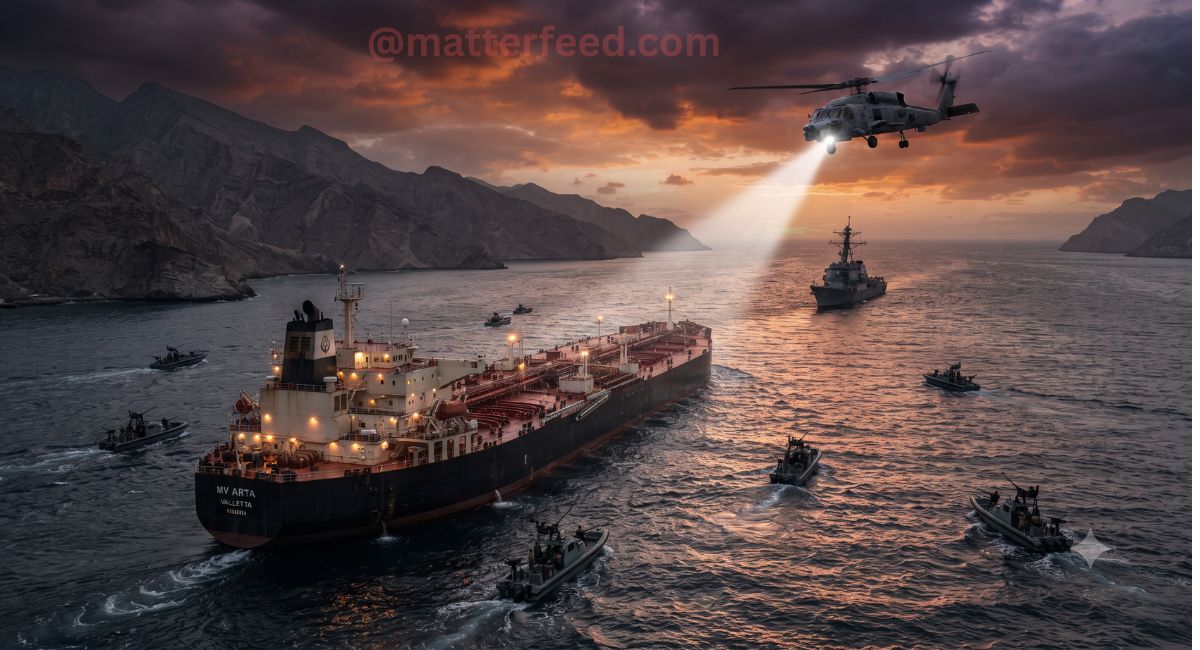
The Middle East is on edge as Tehran threatens to shut down all energy exports from the Persian Gulf. This move is a direct response to the United States' decision to reimpose a strict maritime and economic blockade, aiming to drop Iran’s oil revenue to zero.
This escalation has sent shockwaves through global energy markets. As tensions rise, the world faces the dangerous prospect of a major conflict in its most critical energy transit corridor.
The Genesis: US Blockade Returns
The U.S. has launched a “maximum pressure” campaign to cut Iran’s economic lifelines. Washington aims to starve the regime of cash by targeting its oil and shipping sectors using:
• Secondary Sanctions: Penalizing any nation or company that buys Iranian crude.
• Maritime Interdiction: Aggressive naval patrols and potential seizures of tankers.
• Financial Isolation: Cutting Iranian banks off from international messaging systems.
The U.S. justifies these moves by citing Iran’s nuclear program, ballistic missile development, and regional proxy networks.
Tehran’s "Equal Ruin" Doctrine
Faced with economic strangulation, Iran’s leadership has declared an “Equal Ruin” policy: If Iran cannot export its oil, no one in the region will. This is not just talk; it is a calculated asymmetric threat. By targeting the energy security of U.S. allies like Saudi Arabia, the UAE, and Iraq, Tehran intends to force the global economy to pay the price for Washington's pressure.
The Strait of Hormuz: The World’s Energy Chokepoint
At the center of this standoff is the Strait of Hormuz, where roughly 20% of the world’s liquid petroleum passes daily.
• Daily Flow: ~20.5 million barrels.
• Key Exporters: Saudi Arabia, Iraq, UAE, Kuwait, Qatar.
• Width: Only 21 miles at its narrowest point.
Iran has positioned itself to disrupt this flow using:
• Naval Mines: Hidden, high-impact explosives.
• Fast Attack Craft: Swarms of armed speedboats.
• Anti-Ship Missiles: Batteries along the coast.
• Kamikaze Drones: Low-cost, GPS-guided threats to tankers.
Economic Fallout: A Potential $150–$200 Oil Price?
A blockade of the Strait would be catastrophic. Analysts warn that Brent crude could surge past $150 per barrel, with some fearing it could hit $200. This would trigger global inflation and likely a deep recession.
Additionally, Qatar—the world’s top LNG exporter—relies entirely on this route. A closure would cripple global gas markets, driving utility costs to historic highs for Europe and Asia.
Regional Reactions & Global Alignments
• GCC Nations: Saudi Arabia and the UAE are in a tough spot. They support curbing Iran but are highly vulnerable to retaliation. Their alternative pipelines are insufficient to handle the volume currently moving through the Strait.
• Major Asian Importers: China, India, Japan, and South Korea are heavily dependent on Mideast oil. China is in a unique dilemma, balancing its ties to Tehran with its desperate need for stable, legal energy supplies from the Gulf.
Can It Be Resolved?
The U.S. Fifth Fleet has ramped up patrols and is working with allies to keep lanes open through mine sweeping and armed escorts. However, experts warn that securing a 21-mile waterway against asymmetric attacks is nearly impossible.
Diplomatic channels via intermediaries like Oman and Qatar remain the only hope. A potential path forward involves limited sanctions relief for humanitarian goods and a mutual agreement to stop the "tanker war." Without a breakthrough, the world remains one spark away from a massive energy crisis.